

The holiday season gives medical spas an opportunity to showcase skincare products, create giftable collections, and increase retail sales. But simply stocking your shelves with holiday products is not enough.
How you display, organize, and present your products can influence how easily clients discover them. Retail merchandising for medical spas is the process of selecting, arranging, and presenting products to make shopping easier and more appealing.
For med spas, this includes everything from skincare displays and gift baskets to product placement and inventory management. A thoughtful strategy can help clients find products that fit their needs while creating opportunities for additional revenue.
This guide explores practical holiday retail merchandising ideas, including how to design displays, organize gift sets, manage inventory, and use med spa management software to track retail performance.
Retail products give medical spas an opportunity to serve clients beyond their appointments. Skincare products, beauty accessories, and curated gift sets can complement the services your practice provides.
Effective retail merchandising can help your practice:
During the holidays, merchandising becomes especially important because some clients may be shopping for gifts rather than products for themselves. Your displays should help both types of shoppers find what they are looking for.
Before decorating your retail shelves, review the products you already carry. Start with items that have demonstrated demand and are suitable for holiday gifting.
Consider featuring:
Choose products that fit your clients' interests and your med spa's brand.
Use previous retail sales data to identify products clients purchase most often. Popular items may deserve more prominent placement because your team already understands their demand.
Do not assume every bestseller is suitable for gifting. Some professional skincare products require individualized recommendations or have usage considerations that make them less appropriate for general gift sets.
Merchandising tip: Build holiday displays around a focused selection of products rather than trying to showcase your entire inventory at once.
Your retail area should be easy to navigate and visually appealing. Clients should be able to recognize featured products, understand pricing, and explore gift options without needing extensive assistance.
Select one primary location for your holiday display. Depending on your layout, this might be:
Choose a location that is visible without interfering with client movement or treatment operations.
Arrange products at different heights to make the display more interesting. For example:
Avoid overcrowding shelves. Clients should be able to see product names and access items safely.
Seasonal decorations can create a festive atmosphere, but they should not distract from the products. Use a consistent color palette that complements your brand.
Consider incorporating:
Merchandising tip: Make the products the main attraction. Decorations should support the display, not overwhelm it.
Holiday shoppers often appreciate having products grouped into simple gift categories. Instead of arranging everything only by brand, organize part of your retail display around gifting needs.
| Collection | Suggested Products |
|---|---|
| Everyday Skincare Essentials | Cleanser, moisturizer, sunscreen |
| Winter Hydration Collection | Hydrating moisturizer, lip care, suitable serum |
| Travel-Friendly Favorites | Travel-size skincare and cosmetic bag |
| Skincare Starter Set | Gentle cleanser and basic skincare essentials |
| Luxury Skincare Gift Set | Selected premium skincare products |
| Stocking Stuffers | Lip products, accessories, travel-size items |
Not every shopper has the same budget. Consider displaying products across a range of prices:
Use clear signage so clients can quickly identify options within their preferred budget.
Some products contain active ingredients that may not be suitable for every recipient. For general gift sets, prioritize products appropriate for broad gifting or provide clear guidance about consultation requirements.
Merchandising tip: Organize gift collections around convenience and suitability, not just the highest-priced products.
Holiday gift baskets can turn individual products into ready-to-give collections and introduce shoppers to complementary items.
Start with a simple theme. For example, a winter skincare basket might include:
Make sure the products work together and are appropriate for the intended recipient.
Choose packaging that reflects your brand. Options include:
Consistent packaging makes your retail display look more organized.
Each basket should have a label that clearly identifies:
Avoid making shoppers guess what is inside.
| Cost Component | Amount |
|---|---|
| Retail selling price | $85 |
| Wholesale product cost | $38 |
| Packaging cost | $5 |
| Total direct cost | $43 |
| Contribution before other expenses | $42 |
In this hypothetical example, the basket generates $42 in contribution before payment processing, labor, and other overhead.
Merchandising tip: Account for packaging and assembly costs when pricing gift baskets. Attractive packaging adds value, but it also affects margins.
Your main retail display is not the only place clients may notice products. Thoughtful placement throughout appropriate areas of your practice can improve product visibility.
Feature seasonal gift sets, bestsellers, and clearly priced products. This is often a natural location for clients to browse before or after appointments.
Display smaller giftable items without cluttering the payment area. Examples include lip care products, skincare accessories, or travel-size items.
Where appropriate, make relevant product information available to support professional skincare recommendations. Keep treatment spaces organized and follow applicable sanitation and clinical requirements.
Use a small display or product information card to introduce featured retail collections.
More displays do not necessarily create a better shopping experience. Choose locations where products are easy to see, accessible, and appropriate for the environment.
Merchandising tip: Use each display for a specific purpose instead of repeating the same products throughout your practice.
Good signage helps clients understand your products without needing to ask staff for every detail. Holiday signs should be easy to read and consistent with your brand.
Consider headings such as:
For individual products or gift sets, include:
Keep the wording concise. Do not promise that a skincare product will produce guaranteed results; use accurate descriptions that reflect intended use and supported benefits.
Merchandising tip: Clear pricing can make browsing more comfortable and reduce the need for staff assistance.
A successful merchandising plan depends on having the right products available. Before building displays, review inventory levels and expected demand.
Identify:
Use previous sales data when available. If a product normally sells 20 units per month, review whether expected holiday demand justifies ordering additional units. Avoid automatically doubling inventory without supporting evidence.
Consider supplier lead times and expected sales.
Expected sales during supplier lead time + Safety stock = Reorder point
If you expect to sell 12 units while waiting for a shipment and want four units of safety stock:
12 + 4 = 16 units
Under these assumptions, reorder when available inventory reaches approximately 16 units.
Use appropriate inventory rotation practices and check expiration dates before including products in gift sets.
Merchandising tip: A smaller, well-managed product assortment may be more profitable than a large selection of items that remain unsold.
Even a well-designed retail display benefits from a knowledgeable team. Staff should understand where products are located, what they cost, and when clients should speak with a qualified provider before using them.
Make sure staff can:
Retail conversations should focus on client needs rather than aggressive sales goals. For example:
"We've put together a few holiday skincare sets near the front desk if you'd like to take a look."
Or: "If you're shopping for a gift, we have a few skincare collections at different price points."
Staff should refer questions about product suitability, active ingredients, or treatment-related skincare to appropriately qualified professionals.
Merchandising tip: Give staff a simple product reference sheet so they can answer common questions consistently.
After setting up displays, track how retail products perform. This helps you understand which items are selling and whether merchandising decisions support your business goals.
| Metric | What It Measures |
|---|---|
| Retail revenue | Total sales from retail products |
| Units sold | Number of products purchased |
| Average retail transaction value | Average retail revenue per transaction |
| Product contribution margin | Revenue remaining after relevant variable costs |
| Inventory turnover | How quickly inventory sells |
| Sell-through rate | Percentage of available units sold during a period |
| Gift set sales | Number of gift baskets or sets purchased |
| Unsold seasonal inventory | Remaining holiday-specific stock |
Sell-through rate = Units sold / Units available for sale x 100
If you had 50 holiday gift sets available and sold 40:
40 / 50 x 100 = 80%
Your sell-through rate would be 80%, which can help you decide how many gift sets to prepare the following year.
Compare skincare essentials, gift sets, accessories, and other product groups. Identify which displays and products performed well and which may need different placement or pricing.
Merchandising tip: Review both revenue and contribution margins. High sales volume does not always translate into strong profitability.
Holiday retail merchandising involves more than arranging products on shelves. Your practice also needs to track inventory, process sales, monitor product performance, and manage client purchases.
Track available products and monitor inventory changes as items are purchased or used.
Process retail transactions and maintain organized sales records.
Keep relevant product and transaction information accessible for administrative purposes.
Review sales activity to identify popular products and evaluate seasonal performance.
Marketing tools can help practices communicate about available products and holiday collections when used with appropriate client consent.
AestheticsPro offers inventory, point-of-sale, client management, and reporting features designed to support medical spa operations.
Retail merchandising is the process of selecting, organizing, displaying, and presenting products to make them easier for clients to discover and purchase.
Common options include skincare essentials, moisturizers, lip care products, travel-size items, skincare accessories, and curated gift sets. Product selection should reflect client demand and suitability.
Create a clear focal point, group related products, use different display heights, provide visible pricing, and avoid overcrowding shelves.
Gift baskets can be profitable when their selling prices cover product, packaging, assembly, and other relevant costs. Practices should calculate contribution margins before setting prices.
Review historical sales, estimate demand conservatively, monitor stock levels, and avoid overordering seasonal packaging or limited-edition products.
Medical spa software can support inventory tracking, point-of-sale transactions, purchase records, and retail reporting.
Holiday retail merchandising gives medical spas an opportunity to make skincare products more visible, create convenient gifting options, and improve the in-office shopping experience.
Start by choosing products that fit your clients' needs. Then organize displays, create clearly priced gift sets, prepare inventory, and train staff to answer questions. After the season, review sales and inventory results to identify what worked.
A thoughtful retail merchandising strategy can help your practice make better use of its retail space during the holidays and throughout the year.
AestheticsPro provides medical spa management software with inventory, point-of-sale, client management, and reporting tools to help practices organize retail operations.
Book an AestheticsPro demo to explore how connected software can support your medical spa's retail sales and inventory management.
Related articles on growth, operations, and the systems shaping modern medical aesthetics practices.

Learn how medspa software supports secure documentation, digital consent, and HIPAA compliance to meet medical spa requirements...

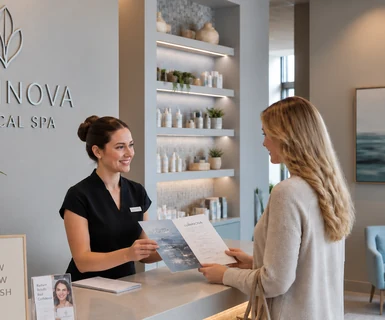
Discover holiday upselling strategies to increase revenue in a med spa with packages, med spa loyalty programs, and med spa software...
Explore post-GLP-1 aesthetic treatments for volume loss, skin laxity, body contouring, and how medical spa software supports ongoing care...

Plan for the med spa holiday rush with a practical checklist for staffing, revenue, inventory, communication, and medical aesthetics software...

Learn how to plan winter aesthetic procedures before holiday events, including timing, downtime, skin quality, and natural-looking results...

See when growing med spas need med spa management software, what small business tools may outgrow, and what to look for next...
See what medical spa booking software should do before the visit, from intake and reminders to connected practice workflows...

See how spa management software can support repeat visits, memberships, stronger client retention, and long-term medspa growth...
See how AI-powered med spa software is helping aesthetic practices streamline workflows, save time, and improve the client experience...


 Login
